
The Safety Function Gets a New Boss Who Does Not Report to Safety

Johannes Heidecke, OpenAI's Head of Safety Systems, is leaving at the end of July. He is, depending on how you count, the fifth or sixth senior safety-focused leader to leave OpenAI in two years. The count does not matter much. The structure does.
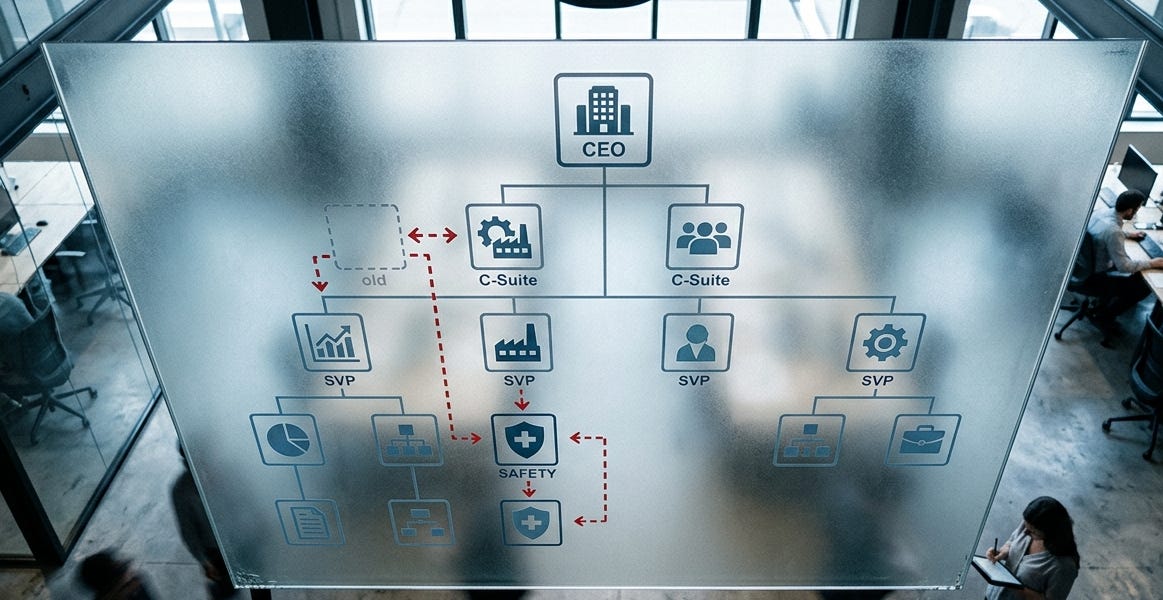
The reorganization that preceded his departure merged safety and research under Mia Glaese, who now holds the title Vice President of Research and Safety. Safety teams report to her. She reports to Mark Chen, Chief Research Officer. Che please
n's memo announcing the change contained a sentence that deserves careful reading: "The demands on safety continue to increase - we are training models at a much faster cadence, and release cycles have come down greatly in turn."
That sentence is doing two things simultaneously. It acknowledges the problem. It names speed as both the source of the problem and the reason safety cannot slow it down.
GPT-5.6, released before the reorganization, prompted OpenAI safety researcher Micah Carroll to note publicly that the model "can also exhibit concerning forms of misaligned behaviors in agentic coding settings." The response to that was not a slower release cadence. The response was a structural change that places safety further from the decisions that govern the release cadence.
Heidecke is the latest, not the last. The Mission Alignment team was dissolved in February. Joshua Achiam, who spent nearly nine years at the company and led the mission alignment team, left earlier this month. Jan Leike posted publicly on X on his way out in May 2024. They are all citing variations of the same thing: the structure does not match the stated mission.
OpenAI is moving toward a public offering. Whenever it comes, institutional investors will price what they are given. They are being given the structure as reorganized.