
The Electricity Ceiling Is Already Here and Capital Knows It

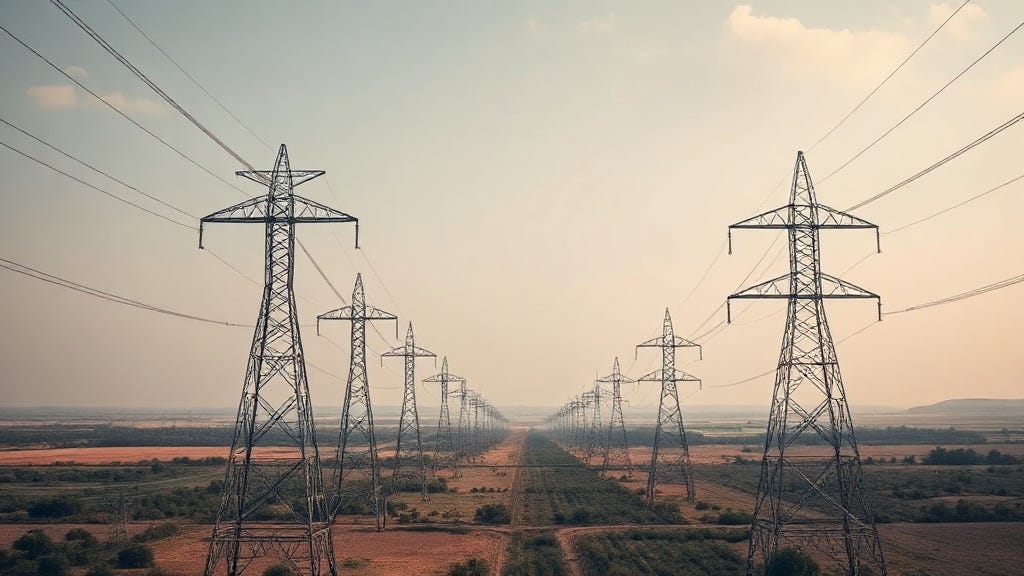
Three independent sources — a sector tracker, an infrastructure outlet, and a funding record — arrived at the same structural condition without referencing each other. That’s the tell.
FeedTheAI built its entire classification system around a single question: which startups unlock electricity for AI scale. That’s not a marketing frame. It’s a taxonomy. When a sector tracker organises its analytical categories around a constraint, the constraint is load-bearing. The Register, covering cloud infrastructure from a completely different position, stated it directly: providers face pressure to deliver more performance while controlling power consumption and datacenter footprint. And a funding record shows Thea Energy closing a $100 million Series B in fusion energy development, timed explicitly to AI infrastructure demand.
None of these sources quote each other. None operate in the same market segment. All three are responding to the same physical fact: AI-scale compute is pulling more power than the infrastructure built to supply it.
The constraint doesn’t stop at the data centre wall, either. Inside the FeedTheAI documents, two fragments describe what energy pressure produces at the model level: training dynamics that fail under resource scarcity, specifically gradient starvation, and LLM deployments that plateau. The power problem propagates upward into model performance. It’s not only an infrastructure story. It’s a capability story.
Capital has already read this. It’s not flowing toward AI applications. It’s flowing toward the layer beneath them, toward anything positioned to expand electricity supply at scale. Companies that can’t access power at the required scale hit a ceiling no software fix moves.
The civil engineering layer — transmission construction, grid interconnection, the physical works that would actually close the gap — isn’t in the current record. That side of the story still needs to be told. What the record does show is a $100 million bet that the ceiling is real and that generation is where the constraint gets solved.